Tamata Reo | Self-Initiated Project
Tactile Learning Tool (Abacus Prototype)
Aotearoa NZ
Overview
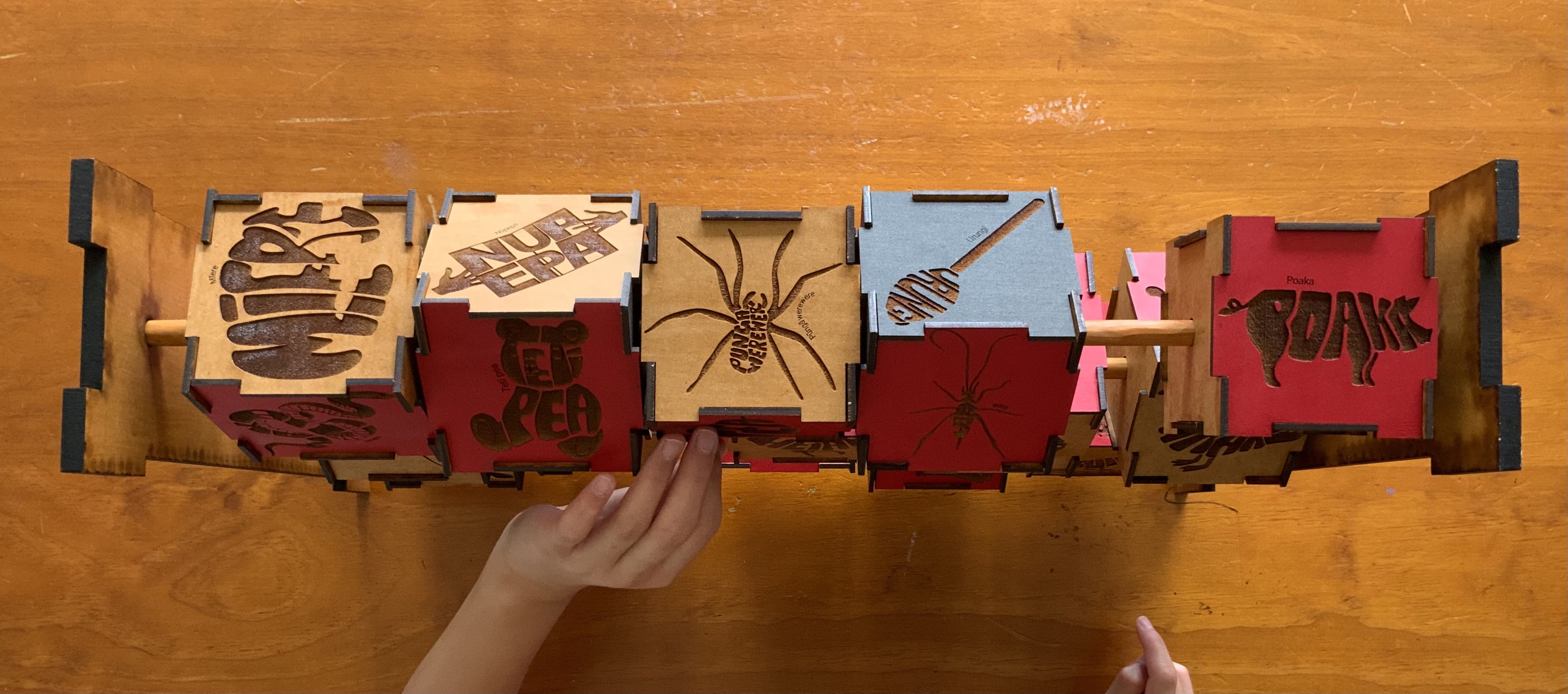
This iteration of Tamata Reo extends the original cube-based system into a tactile abacus designed to support te reo Māori learning through physical interaction and sensory engagement. The project explores how language can be experienced not only visually, but through movement, rhythm, and touch. Each bead on the abacus carries a custom-designed glyph from the Tamata Reo collection, where each form corresponds to a kupu (word), creating a structured yet playful learning system.
Challenge
The central challenge was to reimagine language learning tools beyond static or screen-based formats, and instead design something that supports embodied learning. Many educational resources for te reo Māori rely heavily on memorisation or visual repetition, which can limit accessibility for tamariki and learners who engage more effectively through kinaesthetic and sensory-based methods. The task was to translate abstract language structures into something tangible, interactive, and intuitive—while remaining grounded in kaupapa Māori values.
Approach
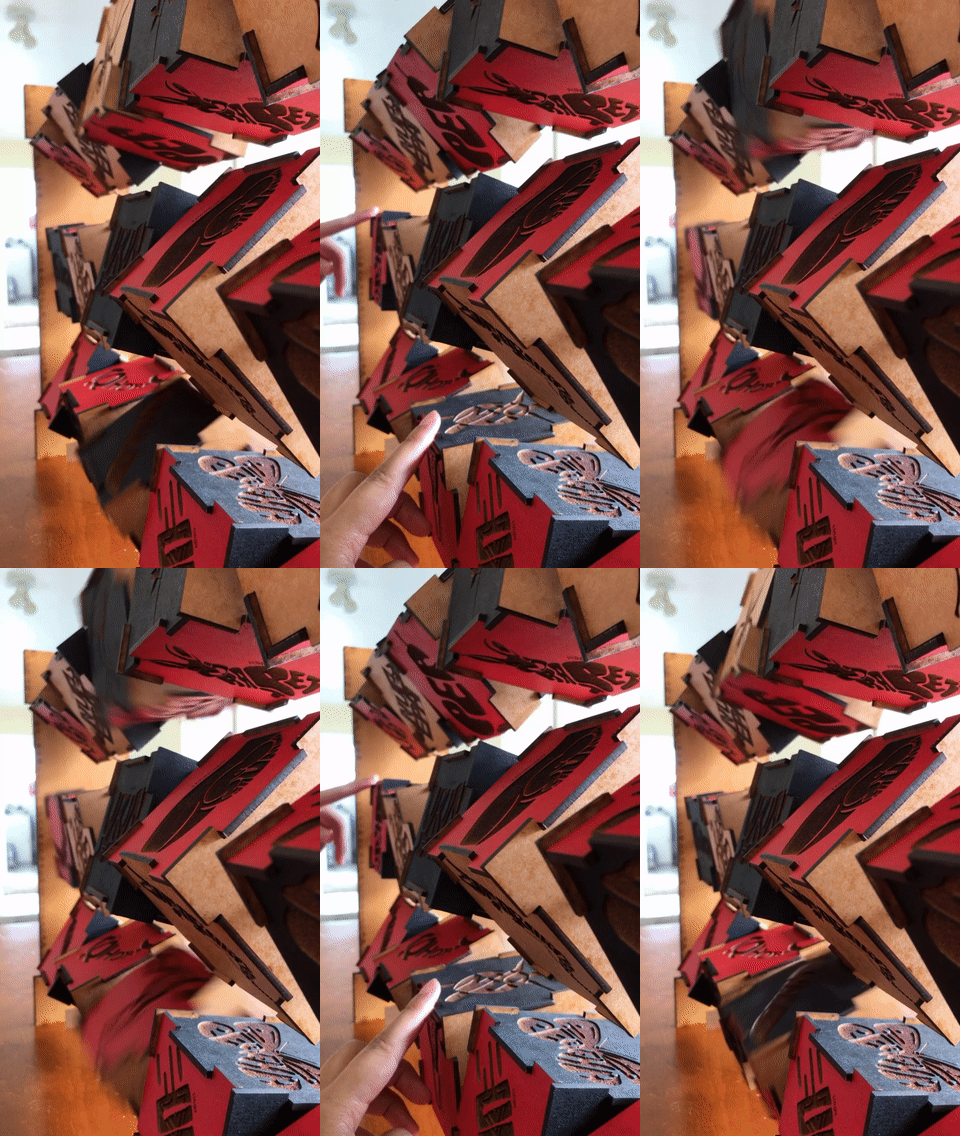
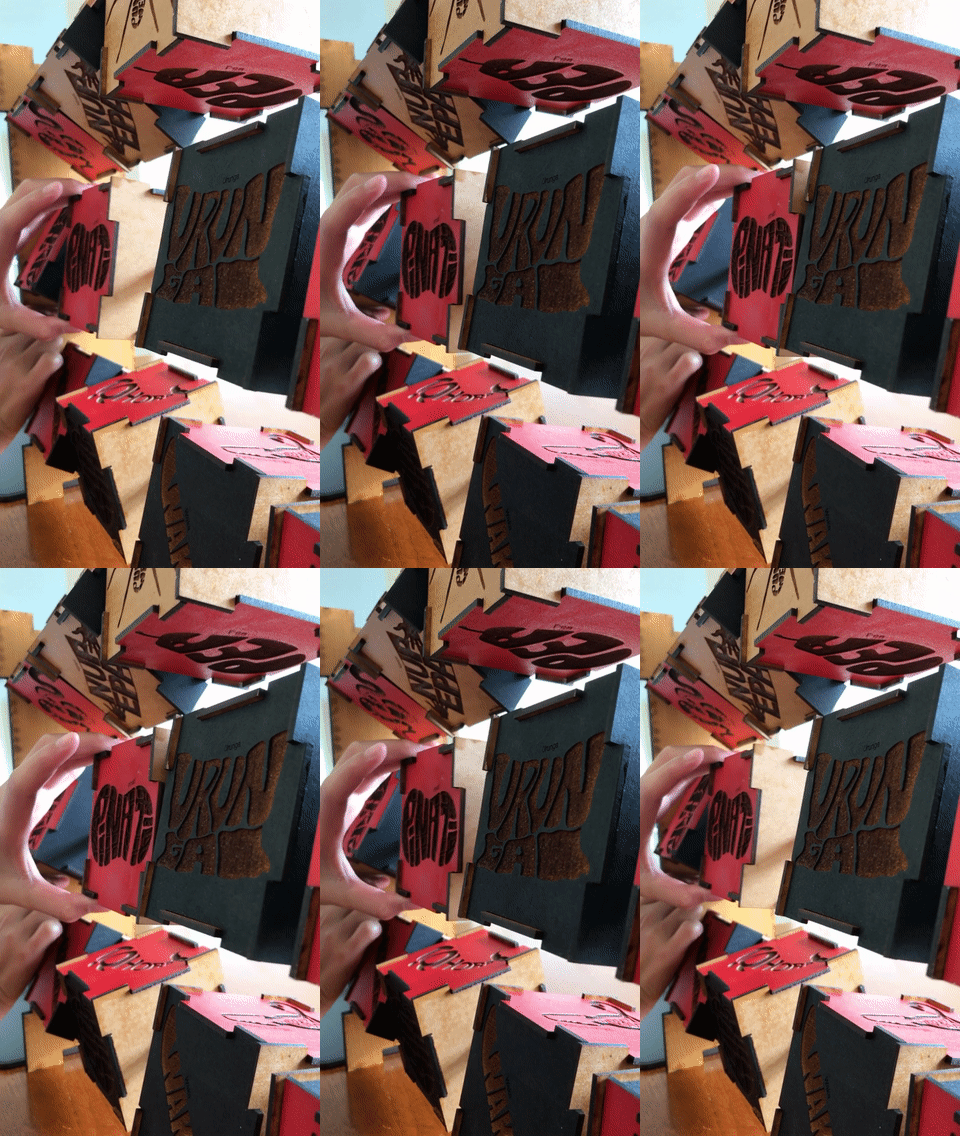
The design approach focused on translating linguistic elements into physical form through a system of glyphs embedded within a modular abacus structure. Each bead functions as both a counting mechanism and a language carrier, allowing kupu to be grouped, repeated, and explored through movement. The act of sliding, counting, and rearranging becomes part of the learning process itself, reinforcing meaning through repetition and rhythm.
Rooted in kaupapa Māori and principles of design for education, the system prioritises accessibility, inclusivity, and cultural integrity. The tactile nature of the object encourages slower, more intentional engagement with language, positioning learning as a hands-on, exploratory experience rather than passive consumption.
Applications
The abacus prototype operates as an educational tool for classrooms, community learning spaces, and early childhood environments. It can be used to introduce foundational vocabulary, support memory retention, and encourage group-based learning activities. Beyond formal education settings, it also functions as a cultural object—bridging art, design, and language revitalisation through physical interaction. The system has potential for extension into larger learning environments, workshop settings, and collaborative teaching resources where movement and repetition support language acquisition.
Outcome
The result is a functional prototype that repositions te reo Māori learning as an embodied, interactive experience. By integrating glyph-based language with a tactile abacus system, the project strengthens engagement through physical interaction and reinforces memory through repetition and rhythm.
Tamata Reo continues to evolve as a broader design system aimed at fostering positive attitudes towards te reo Māori through accessible and inclusive learning tools. This iteration reinforces the project’s core intent: to merge art, design, and education into experiences that support language revitalisation in meaningful, hands-on ways.
Product Design
Prototyping
UX Design
Illustration
Typography